
You spend a third of your life on your mattress. It absorbs sweat, dead skin cells, dust mites, and allergens every single night. Most people never clean it.
Here’s how to do it properly.
Key Takeaways
- Strip and wash all bedding first — hot cycle, every time you deep clean.
- Baking soda is your best tool for deodorizing; let it sit at least 30 minutes.
- Enzyme cleaner breaks down protein-based stains like sweat, blood, and urine.
- Orlando’s year-round warmth creates ideal conditions for dust mites and allergens.
- A mattress protector is the single best thing you can do to extend mattress life.
Step 1: Strip the Bed and Wash Everything
Pull off all sheets, pillowcases, and mattress covers. Wash them in the hottest water the fabric allows — heat kills dust mites.
If you have a mattress topper, wash that too. If it can’t go in the machine, spot clean it and set it outside in direct sunlight for a few hours. UV light kills mite populations naturally.
Don’t put anything back until the mattress itself is fully dry.
Step 2: Vacuum Every Layer
Attach the upholstery tool to your vacuum and work systematically from top to bottom. Use slow, overlapping passes — rushing this step misses embedded debris.
Hit the top surface, the sides, and any seams where dust mites and dead skin accumulate in concentrated pockets. Most people skip the seams. Don’t.
For allergy sufferers in Orlando, this step alone makes a noticeable difference. Central Florida’s pollen counts are some of the highest in the country year-round.
Step 3: Apply Baking Soda
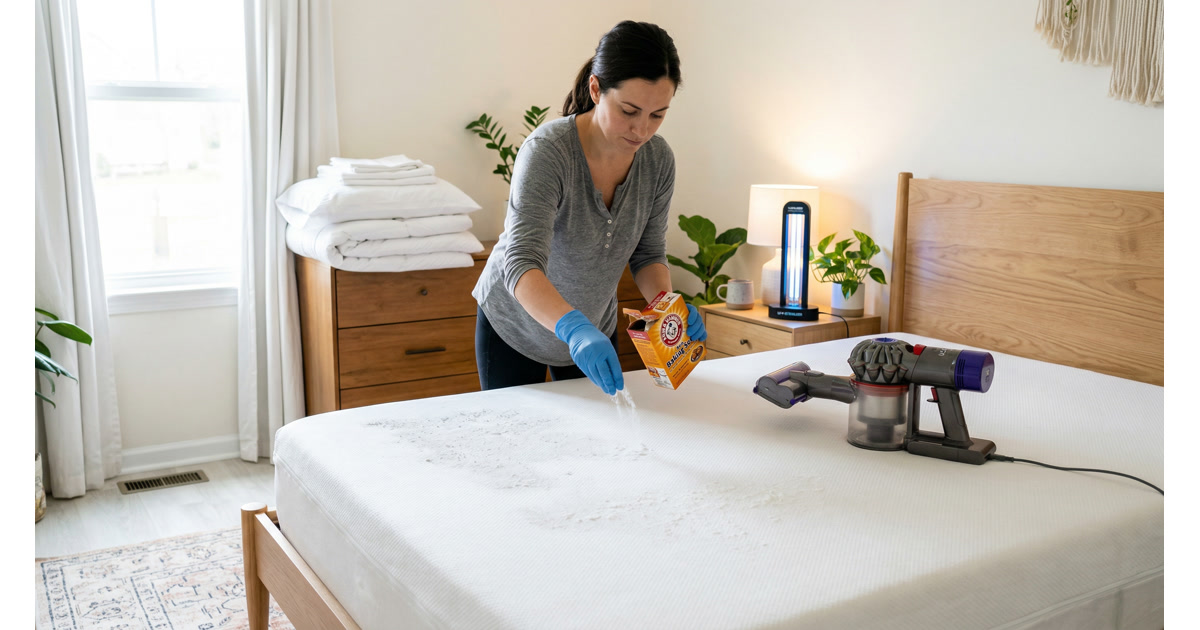
Sprinkle a generous, even layer of baking soda across the entire top surface. Don’t be shy with it.
Let it sit for at least 30 minutes. An hour is better. Two hours is ideal if you have the time. The baking soda absorbs moisture, neutralizes odors, and helps break down mild stains.
Add a few drops of lavender or tea tree essential oil to the baking soda before sprinkling if you want a light fresh scent. Tea tree also adds mild antimicrobial properties.
Vacuum the baking soda up completely using the same slow, deliberate passes as before.
Step 4: Treat Stains with Enzyme Cleaner
Enzyme-based cleaners are the right tool for protein stains — sweat, blood, urine, and similar organic matter. These stains can’t be effectively removed with standard household cleaners.
Spray the enzyme cleaner directly onto the stain. Blot — don’t rub — with a clean white cloth. Work from the outside of the stain inward to avoid spreading it.
Allow the area to air dry completely before moving on. Use a fan to speed this up if needed.
Do not soak the mattress. Too much moisture creates mold risk, particularly in a humid Orlando bedroom.
🧹 Tired of doing this yourself? CleanCorps handles deep cleans, recurring services, and move-in/move-out cleaning across Orlando. **
[getjobber]
Step 5: Use a UV Light Sanitizer (Optional but Effective)
A handheld UV-C light wand kills dust mites, bacteria, and viruses on contact. Run it slowly across the mattress surface — about two inches per second — for full coverage.
This step is especially worthwhile for anyone with severe allergies, asthma, or a compromised immune system. In Orlando, where you’re never far from pollen, pet dander, and high-humidity mold spores, reducing bedroom allergens is a meaningful health move.
Step 6: Flip or Rotate the Mattress
Flip your mattress if it’s double-sided. Rotate it 180 degrees if it’s single-sided. Do this every three to six months.
Rotating extends the mattress life by distributing wear more evenly. It also gives you the opportunity to vacuum the underside and check for moisture or mold growth near the base — another concern unique to Florida’s climate.
Step 7: Let It Air Out Fully
Before remaking the bed, let the mattress breathe for at least an hour. Open windows if the weather cooperates. Run a ceiling fan or standing fan to speed up airflow.
In Orlando’s humid months — roughly May through October — this drying time matters more than you’d think. A slightly damp mattress sealed under sheets is a mold problem in slow motion.
🧹 🏠 Want a professionally cleaned bedroom without lifting a finger? We serve Orlando homeowners with thorough, reliable cleaning that covers every room. **
[getjobber]
Frequently Asked Questions
How often should you sanitize a mattress?
Every three to six months is a good baseline. If someone in your home has allergies or asthma, quarterly cleaning is worth the effort. Orlando’s allergen load makes this more important than it is in drier climates.
Can I use bleach to clean a mattress?
No. Bleach can break down mattress foam and fabric fibers. It also leaves a residue that irritates skin. Stick to enzyme cleaners for stains and baking soda for odors.
How do I remove a blood stain from a mattress?
Act fast. Use cold water — never warm, which sets protein stains. Apply enzyme cleaner and blot with a clean cloth. For older, dried stains, mix hydrogen peroxide with a small amount of dish soap, apply, and blot gently.
Do mattress protectors actually help?
Yes, significantly. A good waterproof mattress protector blocks liquids, dust mites, and allergens from reaching the mattress itself. It’s far easier to wash a protector than to deep clean a mattress.
Are dust mites a bigger problem in Orlando?
They are. Dust mites thrive in warm, humid conditions — exactly what Orlando provides year-round. Regular mattress cleaning and a quality protector are the best defenses.
Final Recommendation
A mattress sanitizing routine takes about two hours and costs next to nothing — baking soda and an enzyme cleaner are your main tools. Do it every three months and you’ll sleep in a cleaner, healthier environment.
If you want help tackling the bedroom and the rest of the house, we’re here. [getjobber]