
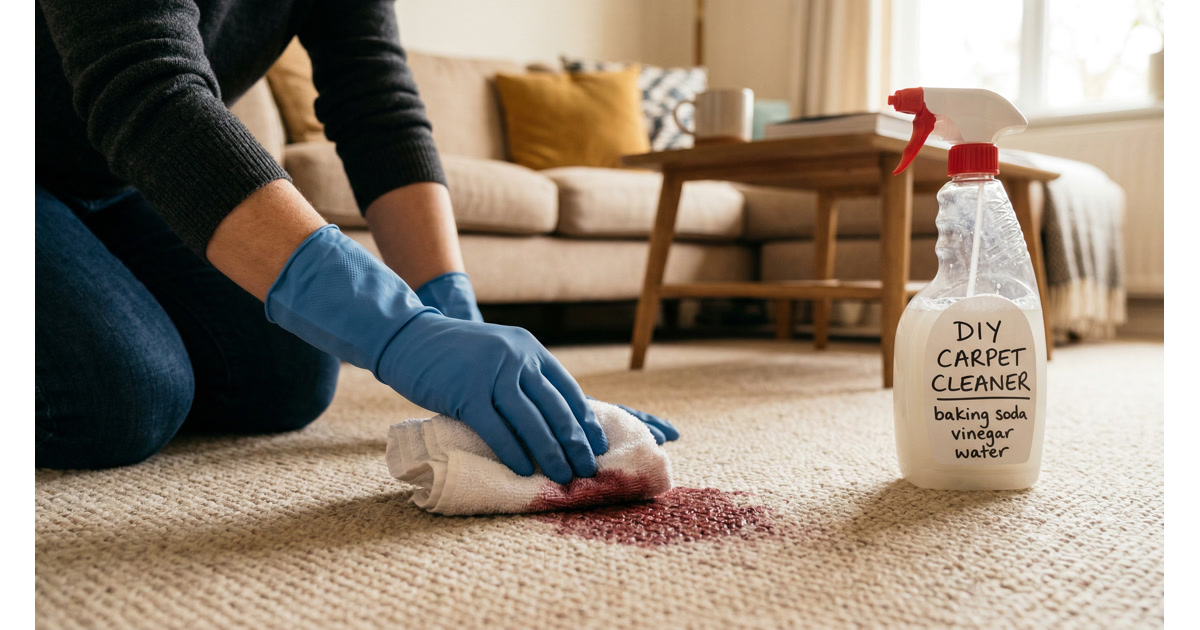
Carpet stains don’t care about your schedule. Whether it’s morning coffee, a muddy dog, or that inevitable glass of red wine — what you do in the next 60 seconds determines whether the stain stays or goes. Here’s exactly how to handle it.
Key Takeaways
- Act within 60 seconds — fresh stains lift in minutes; dried stains fight back hard.
- Always blot, never rub — rubbing spreads the stain and damages carpet fibers.
- DIY solutions work — dish soap + cold water handles most common stains.
- Florida red clay is its own beast — it needs a specific dry-first approach.
- Some stains need a pro — set-in dye stains and deep pet odor usually do.
The 60-Second Rule: Why Speed Wins
The moment a stain hits your carpet, it starts bonding with the fibers. Most stains are still liquid for only a short window — that’s your best shot.
Grab a clean white cloth or paper towels immediately. Start blotting from the outer edge of the stain inward — this stops it from spreading into a bigger mess.
Never rub. Rubbing grinds the stain deeper and can permanently fray carpet fibers. Blot, press, lift. Repeat.
Blot-Not-Rub: The Rule That Changes Everything
This is the single mistake that turns a manageable spill into a permanent stain. Rubbing feels productive — it’s not.
Use firm, downward pressure with your cloth. Work toward the center of the stain with each blot. Keep switching to a clean section of cloth so you’re lifting stain, not redepositing it.
DIY Carpet Cleaning Solutions That Actually Work
You don’t need fancy products for most stains. Here’s what actually works:
All-Purpose Spot Cleaner:
- 1 teaspoon dish soap
- 1 cup cold water
Apply with a cloth, blot, repeat. Rinse with clean cold water and blot dry. Simple and effective for 80% of everyday spills.
Tougher Stains — Enzyme Boost:
- 1 tablespoon white vinegar
- 1 tablespoon dish soap
- 2 cups warm water
The vinegar breaks down organic matter. Great for food stains and light pet accidents.
Important: Always test any solution on a hidden area of carpet first. Some carpets are sensitive to acids or soaps.
How to Remove Coffee Stains from Carpet
Coffee stains set fast and can leave a yellowish-brown ghost even after cleaning if you rush.
1. Blot up as much liquid as possible immediately.
2. Mix 1 teaspoon dish soap + 1 cup cold water.
3. Apply to the stain, blot — don’t rub.
4. Rinse with cold water. Blot dry.
5. If the stain remains, add a splash of white vinegar to your solution and repeat.
Cold water is key. Hot water sets the tannins in coffee and makes the stain permanent.
How to Get Wine Out of Carpet
Red wine is the stain people panic about most — and for good reason. But it’s very beatable if you act fast.
1. Blot up as much wine as possible.
2. Pour a small amount of cold water directly on the stain to dilute it — then blot again.
3. Apply dish soap + cold water solution and blot.
4. For stubborn residue: mix 1 part hydrogen peroxide + 1 part dish soap. Test in a hidden spot first (peroxide can lighten some carpets).
5. Rinse and blot dry thoroughly.
The hydrogen peroxide step is only for light-colored carpets. On dark carpet, skip it and call a pro.
🧹 Tired of doing this yourself? Your Orlando cleaning company handles deep cleans, recurring services, and move-in/move-out cleaning across Orlando. **
How to Remove Pet Stains from Carpet
Pet accidents are a two-part problem: the stain and the odor. Standard cleaners handle the stain but often leave odor molecules behind — which is why your dog keeps returning to the same spot.
1. Blot up as much liquid as possible.
2. Apply cold water, blot again.
3. Use an enzyme-based cleaner (available at any pet store). Enzyme cleaners literally digest the organic compounds causing the odor.
4. Let it sit for the time recommended on the bottle — usually 10 minutes.
5. Blot dry. Do not steam clean or use hot water before the enzyme cleaner has fully worked.
Skip the steam cleaner for fresh pet stains. Heat sets protein-based stains and odors permanently into the fiber.
Florida Red Clay Stains: A Special Case
If you live in Central Florida, you know red clay. It tracks in from lawns, construction sites, and sports fields — and it’s notoriously stubborn.
The key mistake: trying to clean red clay while it’s wet. That spreads it.
The right approach:
1. Let the clay dry completely. Don’t touch it.
2. Once dry, vacuum up as much as possible.
3. Mix 1 tablespoon dish soap + 1 cup cold water.
4. Apply to the stain, blot carefully.
5. Repeat until the stain lifts. It may take several passes.
Red clay that’s been scrubbed wet into carpet fibers may require professional extraction to fully remove.
When to Call a Professional Carpet Cleaner in Orlando
DIY handles most stains. But some situations need professional hot-water extraction equipment:
- Set-in stains that have been there for weeks
- Large area stains that go wall-to-wall
- Deep pet odor soaked through to the carpet padding
- Bleach or dye stains — these may not be fully reversible but a pro knows when to stop
- Post-move-out cleaning where the entire carpet needs a reset
Professional cleaning in Orlando typically costs $100–$250 depending on room count and severity.
🧹 Don’t let stains linger. Our Orlando cleaning team uses professional-grade solutions and techniques to handle what DIY can’t. **
Frequently Asked Questions
Does baking soda remove carpet stains?
Baking soda is better at absorbing odors than removing stains. Sprinkle it on a dried stain or pet accident, let it sit for 15 minutes, then vacuum. Follow up with a dish soap + water solution for the actual stain. It’s a useful step in the process — not a standalone fix.
Can I use hot water to clean carpet stains?
No. Hot water sets protein-based stains — like blood, pet urine, and egg — permanently into the fiber. Always use cold or lukewarm water for stain removal unless you’re using a professional hot-water extraction machine, which is a different process entirely.
How do I remove old, dried carpet stains?
Rehydrate the stain first. Apply a small amount of cold water and let it sit for a few minutes to loosen the dried material. Then treat it with a dish soap + water solution and blot. Old stains often take multiple rounds of treatment. For anything that’s been there more than a few weeks, professional extraction is usually the most effective option.
Is white vinegar safe on all carpets?
Most carpets tolerate white vinegar well, but always spot-test first. Avoid using vinegar on wool or natural fiber carpets — the acid can damage the fibers. On synthetic carpets (nylon, polyester, olefin), it’s generally safe at diluted concentrations.
When is professional carpet cleaning worth it in Orlando?
If your stain has been there more than a week, covers a large area, or involves deep pet odor (especially if it’s soaked into the padding beneath the carpet), professional cleaning is worth it. Hot-water extraction reaches the base of the carpet in a way no DIY method can.
Final Recommendation
Most carpet stains are beatable at home if you act fast and blot — not rub. Keep a bottle of dish soap and some white cloths under the sink so you’re ready within that critical 60-second window. For Florida-specific challenges like red clay or high-humidity pet odors, give the right method a chance before assuming the stain is permanent.
When a stain is set, large, or deeply embedded — don’t keep scrubbing and making it worse. That’s when a professional carpet cleaning in Orlando pays for itself.

