
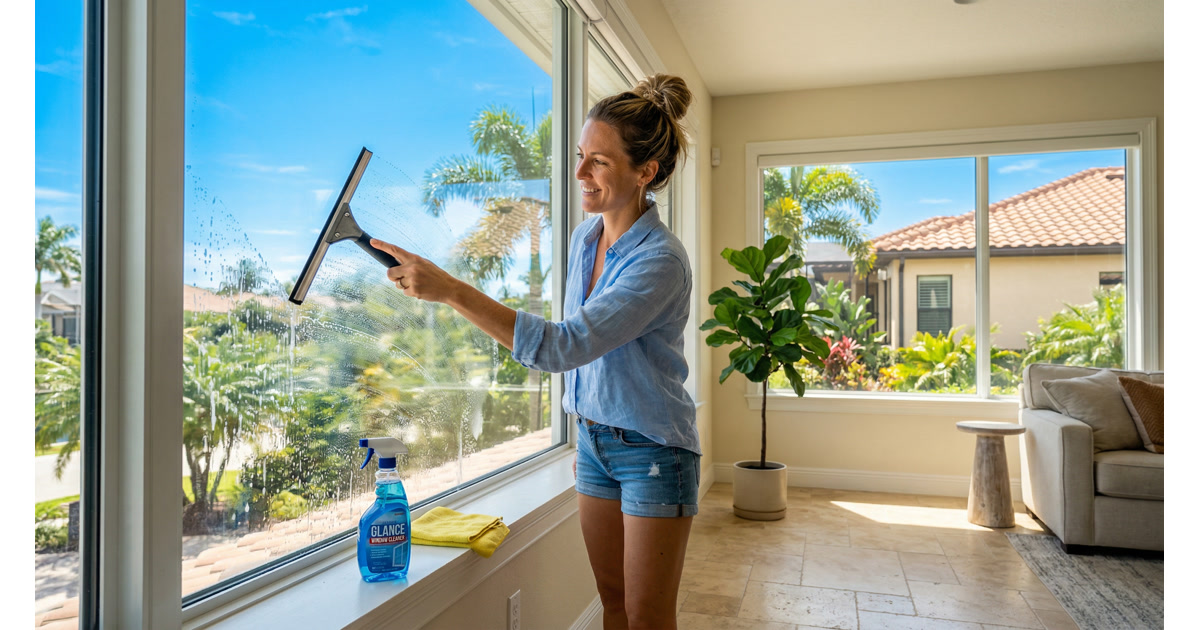
Streaky windows are almost always a technique problem, not a product problem. The right solution, the right tool, and one critical rule about Florida sunlight — and your windows will look professionally clean every time.
Key Takeaways
- Never clean windows in direct Florida sun — the solution dries before you can wipe it and leaves streaks instantly.
- Dish soap + distilled water beats most commercial cleaners — simple, effective, no residue.
- A squeegee is the fastest path to zero streaks — microfiber works great too if you learn the S-pattern.
- Florida hard water leaves mineral deposits — white vinegar or a dedicated hard water remover handles them.
- Interior and exterior windows need different approaches — exterior takes more prep, interior needs lighter touch.
The Golden Rule: Never Clean in Direct Sunlight
This is the rule that causes more streaky windows in Orlando than anything else. When the Florida sun hits your glass directly, your cleaning solution evaporates faster than you can wipe — and every evaporated droplet leaves a streak.
Clean windows in the morning before the sun hits that side of the house. Or wait until late afternoon when the sun has moved. Overcast days are ideal.
This single change will improve your results dramatically before you even pick up a cloth.
The Best Window Cleaning Solutions
You don’t need to spend money on specialty window sprays. Here are the two formulas that professionals actually use:
Dish Soap + Distilled Water (Best All-Purpose):
- 1–2 drops of dish soap
- 1 gallon of distilled water
That’s it. The key word is distilled. Tap water in Orlando is hard — it contains minerals that deposit on glass as it evaporates. Distilled water leaves nothing behind.
White Vinegar Solution (Best for Hard Water Deposits):
- 1 part white vinegar
- 1 part distilled water
The mild acidity in vinegar dissolves calcium and magnesium deposits left by Orlando’s hard water. Use this when you see white, chalky film or spotting on glass.
Avoid: Multi-surface sprays, ammonia-based cleaners (they damage window tint), and paper towels (they lint and scratch over time).
Squeegee Method: The Professional Technique
A $10–$15 squeegee is the best investment in streak-free windows. Here’s the professional technique:
1. Wet the entire window with your solution using a sponge or microfiber applicator.
2. Start at the top corner. Place the squeegee at a slight downward angle.
3. Pull horizontally across the window in one smooth stroke.
4. Wipe the squeegee blade with a clean, dry cloth after each pass.
5. Overlap each stroke slightly with the previous one.
6. Wipe the edges with a dry microfiber cloth at the end.
The most common mistake: not wiping the blade between strokes. That re-deposits dirty water across the clean section.
For large windows, vertical strokes (top to bottom) work better than horizontal. Use whatever direction lets you complete the stroke without stopping.
Microfiber Cloth Method: The S-Pattern
If you don’t have a squeegee, a clean microfiber cloth is the next best option. The technique is everything.
The S-Pattern:
1. Fold the microfiber cloth into quarters so you have four clean faces to work with.
2. Apply solution directly to the cloth — not the glass.
3. Wipe in an S-shaped pattern from top to bottom, slightly overlapping each row.
4. Flip to a dry section of the cloth and buff lightly in circular motions to finish.
The S-pattern ensures you’re always wiping with a clean part of the cloth and never re-depositing what you just picked up.
Microfiber cloths must be clean and lint-free. Washed cloths work better than new ones — new microfiber sometimes still has manufacturing residue.
🧹 Tired of doing this yourself? Your Orlando cleaning company handles deep cleans, recurring services, and move-in/move-out cleaning across Orlando. **
Florida Hard Water Stains: What They Are and How to Remove Them
If you see white, chalky spots or a hazy film on your windows — especially exterior glass — that’s mineral buildup from Florida’s famously hard water. Rain and sprinkler systems deposit mineral-laden water on glass, which evaporates and leaves calcium and magnesium behind.
Standard cleaning won’t touch these deposits. You need something acidic.
DIY Hard Water Stain Removal:
1. Mix equal parts white vinegar and distilled water.
2. Apply generously to the affected area and let it sit for 2–5 minutes.
3. Scrub gently with a non-scratch scrubbing pad.
4. Rinse with distilled water and squeegee dry.
For severe buildup: commercial products like CLR or Bar Keepers Friend (in gel form for glass) work well. Follow the product instructions and rinse thoroughly.
Important: If your windows have a tint or special coating, test any acidic cleaner on a small corner first. Acids can damage some coatings.
Interior vs. Exterior Windows: Key Differences
Interior and exterior windows need slightly different approaches.
Interior windows:
- Use lighter solution — less soap residue to deal with.
- Work gently around window frames and sills.
- Focus on fingerprints, smudges, and dust.
- Paper thin streaks on the inside are often from your breath — buff with a dry cloth.
Exterior windows in Orlando:
- More buildup from pollen, dust, rain mineral deposits, and Orlando’s distinctive sandy grime.
- May need a pre-rinse with a hose to knock off heavy debris before cleaning.
- Hard water stains are far more common on exterior glass.
- Second-story or hard-to-reach exterior windows: use a telescoping squeegee or hire a professional — safety first.
How Often Should You Clean Windows in Orlando?
Orlando’s combination of pollen season (February–April is peak), afternoon thunderstorms, and high humidity means windows get dirty fast.
Recommended schedule:
- Interior: Every 1–2 months
- Exterior: Every 2–3 months, more during spring pollen season
- After major storms: Wipe down as soon as possible — storm water with mineral content left to dry creates hard water deposits quickly.
🧹 Your windows should let the Orlando sunshine in — not block it with grime. Our cleaning team handles interior and exterior window cleaning across Orlando, including hard-to-reach spots. **
Frequently Asked Questions
Why do my windows streak even after cleaning?
The most common causes are: cleaning in direct sunlight (solution dries before you wipe), using tap water instead of distilled (mineral residue), using too much soap (creates film), or using a dirty cloth that re-deposits residue. Fix the technique before switching products.
Is vinegar safe to use on windows?
Yes — diluted white vinegar is safe on standard glass and works well against mineral deposits. Avoid it on tinted windows or glass with special coatings without spot-testing first. Never use undiluted vinegar; always mix it 1:1 with distilled water.
How do I remove hard water stains from windows in Florida?
Apply a 50/50 mix of white vinegar and distilled water, let it sit 2–5 minutes, then scrub gently with a non-scratch pad. For severe deposits, CLR or Bar Keepers Friend gel are stronger options. Always rinse with distilled water and dry immediately. Stubborn stains may need professional glass restoration.
What’s the best tool for streak-free windows — squeegee or microfiber?
A squeegee is faster and gives more consistent results on larger windows. Microfiber cloths are better for smaller windows, interior glass, and detail work around frames. Both work well when used correctly. The technique matters more than the tool.
Should I clean my windows before or after it rains?
After. Rain leaves mineral deposits from both the rainwater itself and anything it picks up on the way down. Clean after the rain has passed and glass has dried — you’ll start with a cleaner surface and your results will last longer. Cleaning before rain is mostly wasted effort.
Final Recommendation
Streak-free windows come down to three things: timing (no direct sun), solution (distilled water — not tap), and technique (squeegee or S-pattern microfiber with clean cloth sections). Master those three and you’ll get professional results every time.
For exterior windows on second stories, heavy hard water buildup, or just a full-home window cleaning you don’t want to spend a Saturday on — our Orlando team has you covered.

