Your sofa takes a beating — spills, pets, sweat, and here in Orlando, constant humidity. Clean it wrong and you can set stains, shrink the fabric, or worse — invite mold. Here’s how to do it right the first time.
Key Takeaways
- Check the fabric code first — W, S, WS, or X tells you exactly which cleaning method to use.
- Always vacuum before any wet cleaning — loose debris mixed with liquid turns into a worse mess.
- Spot-test every product — even mild cleaners can discolor certain fabrics.
- Orlando humidity creates real mold risk — proper drying after cleaning is non-negotiable.
- X-coded fabric means no liquids at all — vacuum or call a pro.
Step 1: Find the Fabric Cleaning Code
Before you spray anything, flip over a cushion and look for a small white tag. The letter on that tag is the most important thing you’ll read today.
| Code | What It Means |
| **W** | Water-based cleaners only |
| **S** | Solvent-based cleaners only (no water) |
| **WS** | Either water or solvent-based cleaners |
| **X** | Vacuum only — no liquids whatsoever |
Using water on an S-coded fabric can cause shrinkage, watermarks, and color bleed. There’s no fixing that mistake after the fact.
Step 2: Vacuum First — Always
This step is skipped constantly. Don’t skip it.
Use the upholstery attachment on your vacuum and go over every surface — seat cushions, back cushions, armrests, and the crevices between. You’re removing crumbs, dust, pet hair, and dry debris that would otherwise mix with your cleaning solution and create a muddy mess.
For pet owners: a rubber glove dragged across the fabric first pulls up embedded fur better than most attachments.
Step 3: Spot-Test Before Full Cleaning
Every fabric reacts differently. Even products labeled “safe for upholstery” can cause discoloration on specific materials.
Find an inconspicuous spot — the back corner of the sofa, or the underside of a cushion. Apply a small amount of your cleaning solution. Wait 5 minutes. Check for color change, fading, or texture damage.
If anything looks off, stop and switch products — or call a professional.
How to Clean W-Coded Fabric Sofas (Water-Safe)
Most everyday fabric sofas are W or WS coded. This is the most forgiving category.
DIY Cleaning Solution:
- 1 teaspoon dish soap
- 1 cup distilled water (tap water can leave mineral deposits — especially important in Orlando)
- Optional: 1 tablespoon white vinegar for odor
Method:
1. Dip a clean white microfiber cloth into the solution — don’t soak it. The cloth should be damp, not wet.
2. Blot the stain from the outside in.
3. Use a second cloth dampened with plain distilled water to rinse.
4. Blot dry with a dry cloth.
5. Allow to air dry fully — open windows or use a fan.
Do not over-wet the fabric. Excess moisture soaks into the cushion foam and is a direct invitation for mold in Florida’s humidity.
How to Clean S-Coded Fabric Sofas (Solvent-Only)
S-coded sofas need dry-cleaning solvents — not water. Look for products labeled “dry-cleaning solvent” or “upholstery dry cleaner” at any hardware or home goods store.
Apply a small amount to a clean cloth and blot the stain. Work from the outside edge inward. Do this in a well-ventilated room — these solvents have strong fumes.
Never spray solvent directly onto the fabric. Always apply to the cloth first.
🧹 Tired of doing this yourself? Your Orlando cleaning company handles deep cleans, recurring services, and move-in/move-out cleaning across Orlando. **
Steam Cleaning a Fabric Sofa: When It Works and When It Doesn’t
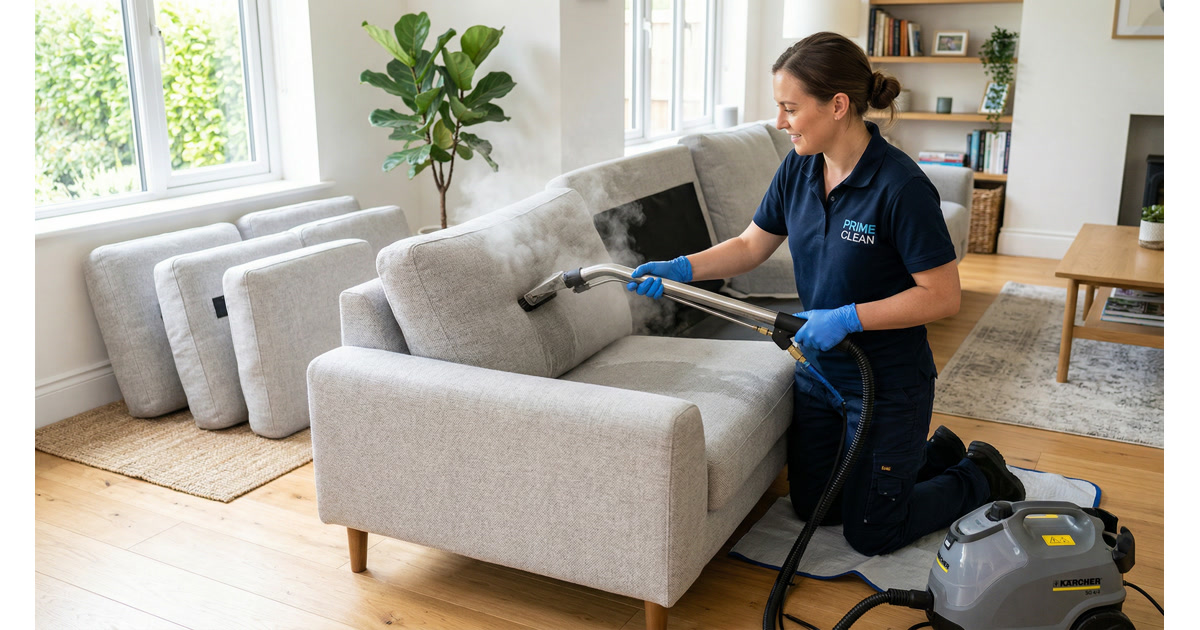
Steam cleaners work well on W and WS coded fabrics. The heat kills bacteria, dust mites, and some mold spores — a genuine benefit in Central Florida.
What to do:
- Use the upholstery attachment.
- Keep the steamer moving — don’t hold it in one spot.
- Work in small sections.
- Allow 4–6 hours of drying time minimum (more in high humidity).
Never steam clean S-coded or X-coded fabric. The moisture will damage the material.
Orlando Humidity and the Real Mold Risk
This is the part most cleaning guides skip because they weren’t written for Florida.
Orlando’s average humidity sits around 74% year-round. If you clean your sofa and it doesn’t dry completely within a few hours, moisture trapped in the foam cushion core creates the perfect environment for mold and mildew to take hold.
How to prevent mold after cleaning:
- Use fans directed at the sofa immediately after cleaning.
- Open windows if outdoor humidity is lower than indoor (check your phone’s weather app).
- Run your AC — it dehumidifies the air.
- If you smell a musty odor within 24–48 hours of cleaning, mold may already be forming. Don’t ignore it.
Surface mold can sometimes be addressed with a diluted white vinegar solution on W-coded fabric. Deep mold in the cushion core typically means the cushion needs replacing or professional remediation.
Drying Tips: The Most Important Step
Rushing the dry is the most common mistake in DIY upholstery cleaning.
- Never sit on the sofa until it’s fully dry.
- Dry time: 4–8 hours depending on humidity and airflow.
- Prop cushions upright so air reaches all sides.
- If in doubt, point a box fan directly at the sofa and give it an extra hour.
In Orlando, plan your sofa cleaning for a morning when you can run the AC all day.
🧹 Your sofa deserves more than a quick wipe-down. Our Orlando upholstery cleaning team uses professional-grade equipment and knows exactly how to handle Florida’s humidity challenges. **
Frequently Asked Questions
What do the fabric cleaning codes W, S, WS, and X mean?
They tell you which type of cleaner is safe to use. W means water-based cleaners only. S means solvent-based cleaners only — no water. WS means either type works. X means no liquid at all — vacuum only. Using the wrong method can permanently damage the fabric.
Can I steam clean any fabric sofa?
No. Steam cleaning is only safe for W or WS coded fabrics. S-coded and X-coded fabrics cannot handle moisture. Always confirm the code on the tag before using any wet or steam cleaning method.
How do I prevent mold on my sofa in Orlando’s humidity?
The key is thorough drying after any cleaning. Use fans, run the AC, and give the sofa 4–8 hours before sitting on it again. Avoid over-wetting the fabric. If cushions feel damp inside, stand them on their edge so both sides can breathe. For already-moldy upholstery, professional cleaning is the safest option.
Is it safe to use baking soda on a fabric sofa?
Yes, for odor absorption. Sprinkle baking soda lightly over the fabric, let it sit for 15–20 minutes, then vacuum thoroughly. This is safe on most fabric codes because it’s dry — no moisture involved. It won’t remove stains, but it’s excellent for freshening up.
When should I call a professional upholstery cleaner in Orlando?
Call a pro when: the fabric code is S or X (solvent cleaning and dry methods are tricky to DIY safely), the stain is large or set-in, you notice mold or mildew odor, or the sofa is a high-value piece you don’t want to risk. Professional upholstery cleaning in Orlando typically runs $80–$200 depending on sofa size.
Final Recommendation
Cleaning your fabric sofa safely starts with two steps most people skip: checking the fabric code and vacuuming first. Do those right and the rest is straightforward. In Orlando specifically, the drying step matters more than anywhere else — take it seriously.
If your sofa has deep stains, odor, mold concerns, or an S or X code that makes DIY risky, professional upholstery cleaning is a smart investment that protects your furniture.

