 Skip to content
October 1, 2026 By Lindsay Hatton, Clean Corps — Handyman & Property Maintenance in Orlando & Central Florida
Most drywall damage in an Orlando home is a quick handyman fix: small holes, popped screws and hairline cracks can be patched, sanded and painted in a day, while a wall that is soft, stained or smells musty needs the moisture source found before anyone picks up a putty knife. The difference matters in Central Florida, where humidity, AC condensation and summer storms cause more wall damage than doorknobs and furniture ever do.
Key Takeaways
- Nail pops, small dents and holes under about 6 inches are routine patch jobs. Larger holes need a cut-out and new backing, not just thicker compound.
- A stain, bubbling paint or a soft spot means water is involved. Fix the leak first, then repair the wall, or the patch will fail.
- EPA guidance says materials dried within 24–48 hours of a leak usually will not grow mold, so speed matters more than the repair method.
- Joint compound dries slower in Florida humidity. Rushing the coats is the most common reason a patch shows through the paint.
- Mold covering roughly 10 square feet or more, or any suspected structural moisture, is a job for qualified professionals rather than a patch.
Why Drywall Fails Differently in Central Florida
Drywall is gypsum wrapped in paper, and paper is food for mold once it stays damp. University of Florida IFAS Extension notes that mold needs moisture, thrives above roughly 60% relative humidity, and grows on drywall, paint and insulation among other materials. In Orlando, Winter Park, Kissimmee and Windermere homes, that kind of humidity is the default for much of the year, so any extra water source turns into a wall problem quickly.
Homes here also take a beating that northern houses do not: afternoon thunderstorms that push rain sideways at window frames, air handlers working hard for most of the year, and lanai doors that open and close all day. Add the usual wear from kids, pets, furniture and moving day, and drywall repair becomes one of the most common requests on a handyman’s list. The usual causes we see on the Orlando side are not dramatic:
- AC condensate overflow stains a ceiling or the wall below an air handler. The cause is usually a clogged drain line, which a routine maintenance visit flushes out.
- Window and door leaks during summer storms show up as a stain or bubbled paint under a window, often weeks after the rain.
- Plumbing leaks behind a sink, toilet or washing machine soften the lower few inches of the wall.
- Screw and nail pops appear as small round bumps when framing moves slightly as it takes on and loses moisture. They are cosmetic, not structural.
- Everyday impact damage from doorknobs, furniture and moving day is the most common source of holes in rentals.
Match the Repair to the Damage
Before you buy a tub of compound, work out what you are actually looking at. The same visible flaw can have very different causes, and the right fix follows the cause. This table is a typical guide, not a quote, since every wall is different:
| What you see | Typical fix | Who handles it |
|---|---|---|
| Nail or screw pop | Re-seat or replace the fastener, skim with compound, sand, prime and paint | Handyman-level |
| Dent or hole smaller than a quarter | Fill with lightweight spackle in thin coats | Handyman-level |
| Hole up to about 6 inches | Self-adhesive or metal-backed patch, then feathered compound | Handyman-level |
| Hole larger than 6 inches | Cut a clean square, add backing strips, install a new piece, tape and finish | Handyman-level, with texture matching |
| Hairline crack above a door or window | Tape and compound, or flexible paintable caulk if it keeps moving | Handyman-level |
| Water stain, bubbling or soft drywall | Find and stop the leak, dry the area, replace the affected board | Handyman for small areas, plumber or roofer for the source |
| Mold covering about 10 sq ft or more | Professional assessment and remediation | Florida-licensed professional |
Florida separates handyman-level work from licensed trades. Our guide to handyman services versus licensed contractors explains where the line sits, and you can check any contractor’s license at myfloridalicense.com before you hire. This is general information, not legal advice.
How a Clean Patch Is Actually Done
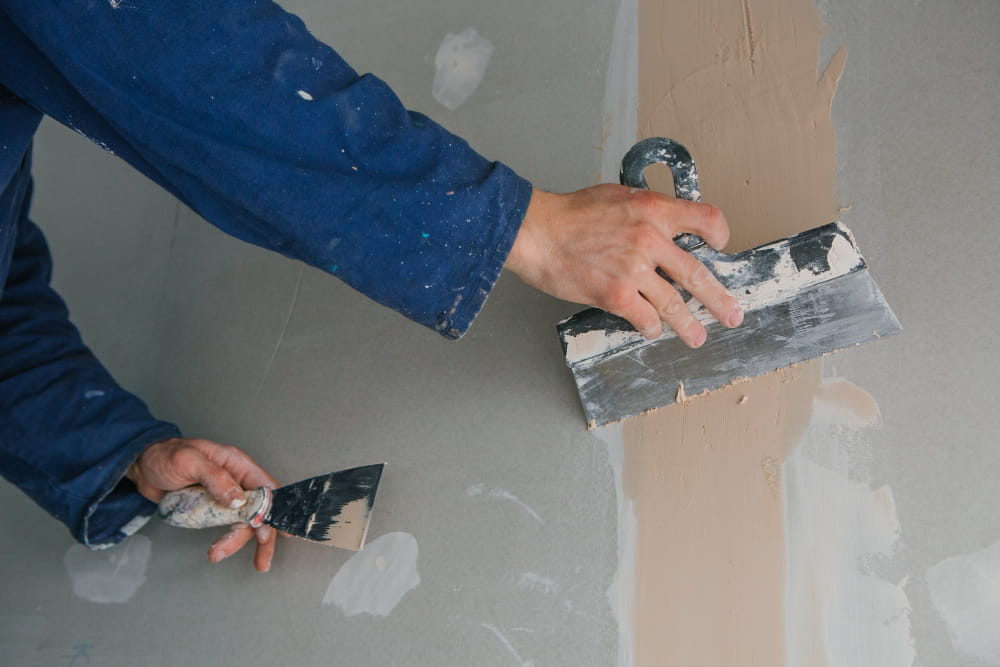
A patch that disappears is mostly patience and sanding. The sequence below works for the small and medium repairs in the table. The tools are simple: a putty knife and a wider taping knife, joint compound, mesh or paper tape, fine sandpaper, primer and matching paint.
- Cut away loose paper and crumbling edges so the patch has solid board around it.
- For holes larger than a coin, install a mesh patch, or a cut-to-fit piece of drywall with backing strips behind it so it has something to screw into.
- Press paper or mesh tape into the first coat of joint compound and scrape it flat.
- Let it dry fully. In humid Orlando weather, plan on hours rather than minutes between coats, and longer if the AC is off or the house has been closed up.
- Apply a second and third coat, each wider than the last, so the edge feathers into the surrounding wall.
- Sand lightly with fine sandpaper and wipe the dust off with a damp cloth.
- Prime the patch before painting. Bare compound soaks up paint differently from the wall and shows through as a dull spot.
- Paint the whole wall section corner to corner if the old paint has faded, so the new coat does not flash against it.
The two places a do-it-yourself patch usually gives itself away are the edges and the texture. Heavy ridges around the patch happen when the compound is applied too thick and too narrow. A smooth patch on a textured wall stands out under side light, and many Central Florida homes have orange peel or knockdown texture that has to be matched with a spray or a roller technique. Matching the paint sheen matters as much as matching the color.
Cracks and Nail Pops: Cosmetic or a Warning?
Most hairline cracks in Orlando homes are cosmetic. They show up at taped joints, in the corners above doors and windows, and where a wall meets a ceiling, because wood framing expands and contracts slightly with the seasons and the humidity. A thin crack that stays the same size for months is a paint-and-patch job. A crack that widens, runs diagonally from a corner, or comes with a sticking door is worth a closer look, since it can point to settling or a moisture problem that a patch will not solve.
Nail and screw pops are similar. A single pop is a five-minute fix. A line of them along one wall suggests the board was hung a little loose or the framing is moving, and re-fastening each one with a drywall screw before finishing prevents them from returning. Skipping that step and only covering the bump with compound is why the same dots reappear a year later.
When a Stain Means Stop
A brown ring on a ceiling or a wall that feels soft to a light press is not a cosmetic problem. Painting over it hides the evidence, and the stain usually comes back. The EPA’s brief guide to mold, moisture and your home states that if wet or damp materials are dried within 24–48 hours of a leak, mold will in most cases not grow, and that porous materials such as ceiling tiles and carpet may have to be thrown away if they become moldy. UF/IFAS makes a similar point in its guidance on mold management in the home, advising that wet items be cleaned and dried within 48 hours.
For a small area, the sequence is: stop the water, dry the cavity with fans, cut out the damaged board back to solid material, let the framing dry, and only then patch. The EPA’s mold resources note that a moldy area smaller than about 10 square feet is generally something a homeowner can handle, while larger areas call for professional guidance. If moisture keeps returning to the same spot, our guides on preventing mold in an Orlando home and preventing water damage in rental properties cover the habits that stop it from coming back.
Drywall Repair for Landlords and Property Managers
For rentals in Kissimmee, Lake Nona or Winter Park, drywall is one of the most frequent items at tenant turnover: door-handle holes, wall-anchor holes, scuffs and the occasional larger impact. The cheapest approach is to handle them as part of the turnover rather than waiting for a move-in complaint. Our rental turnover checklist for Orlando landlords shows where wall repair fits in the sequence. If you manage several units, a recurring plan keeps small repairs from stacking up, and our maintenance packages are built around exactly that kind of ongoing work.
One practical habit: photograph each wall before and after every stay or tenancy. Dated photos make it easy to tell a new impact from an old stain, and a stain that grows between two photos is your early warning for a hidden leak. Catching it at the small-stain stage is the difference between a patch and replacing a section of board.
What to Check Before You Call
- Is the damaged area dry, firm and odor-free? If not, mention the water to whoever you call.
- How large is it, roughly? A photo with a tape measure for scale speeds up any estimate.
- Is the wall textured, and do you know the paint color and sheen? Leftover paint is useful.
- Is there an AC unit, plumbing fixture or window directly above or beside the damage?
- Has it happened before in the same spot? A repeat spot almost always means an active source.
Frequently Asked Questions
Yes. Patching holes, fixing nail pops, taping cracks and replacing small sections of board are routine handyman work. Finding and fixing the leak behind a stain may need a licensed plumber or roofer.
A small patch is usually one visit, but compound needs to dry between coats, and Florida humidity slows that down. Larger repairs with texture matching and paint often take a day or more of drying time.
The framing moves slightly as it takes on and loses moisture, which pushes fasteners out. Re-seating the fastener below the surface, or replacing it with a drywall screw, and then finishing with compound usually fixes it.
Not until the source is fixed and the wall is completely dry. Painting over an active leak hides the problem, and the stain will usually bleed through again.
If the board is soft, crumbling, moldy or has been wet for more than a couple of days, the damaged section should be cut out and replaced. EPA guidance notes that porous materials may have to be thrown away once they become moldy.
Need a hole, crack or stained ceiling fixed in Orlando, Winter Park, Kissimmee or elsewhere in Central Florida? Our drywall and wall repair service covers patching, texture matching and paint touch-up, so the repair looks like the wall was never damaged.
