


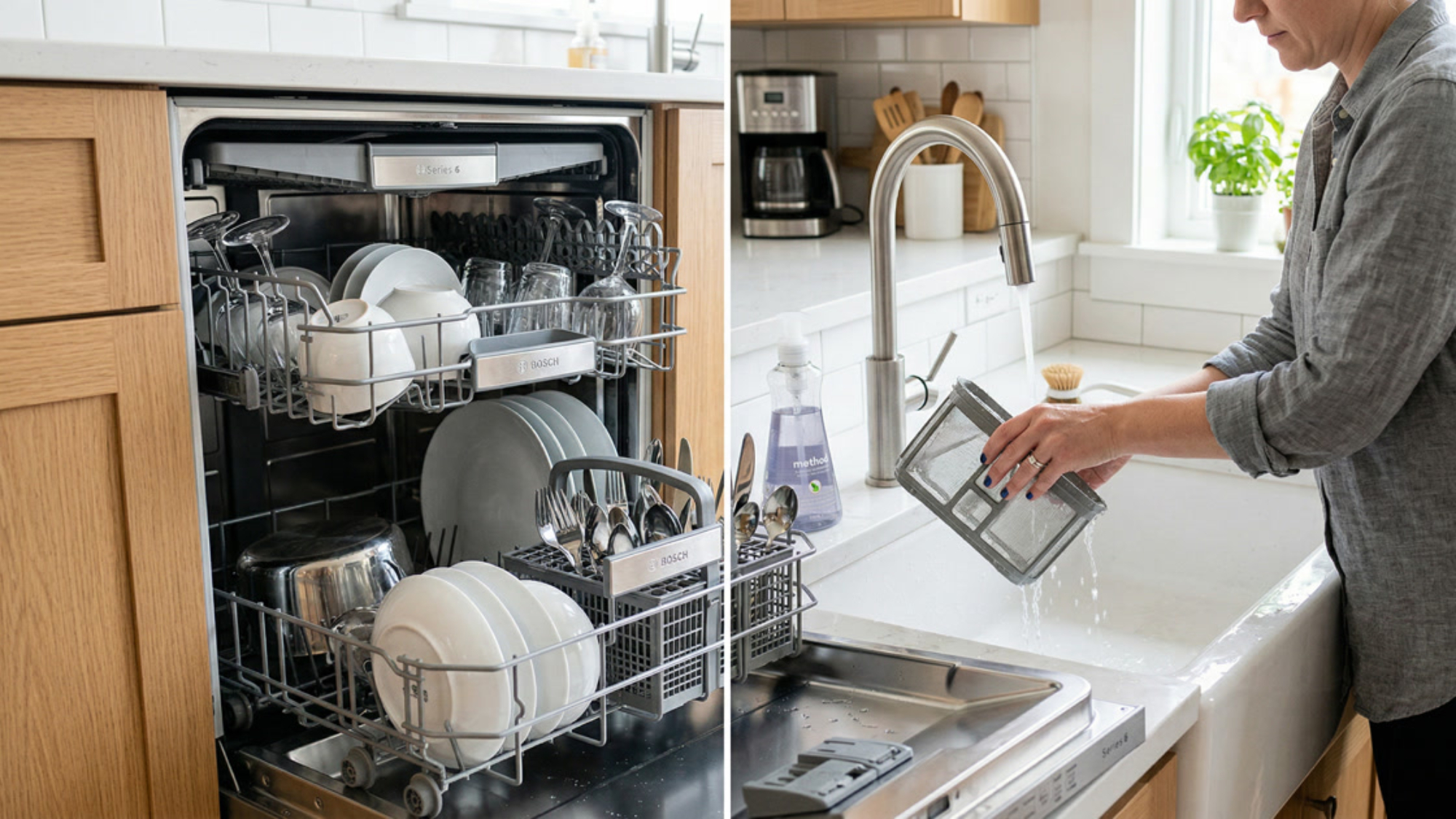
A dirty dishwasher can’t clean dishes — and most people don’t realize the machine itself needs regular maintenance. In Orlando, hard water and humidity create two specific problems: limescale buildup that clogs spray arms and mold that grows in the door seal. Here’s how to fix both, plus how to load it correctly so dishes actually come out clean.
| Key Takeaways |
| The filter is the most neglected part: A clogged filter is why your dishes smell even after a full cycle. |
| Florida hard water leaves limescale: Mineral deposits coat the interior walls, spray arms, and heating element if not treated regularly. |
| Loading order matters: Blocking the spray arms means the top rack barely gets clean — position matters more than most people realize. |
| Door seals trap mold fast: Orlando’s humidity makes the rubber gasket around the door a prime spot for mold growth. |
| White vinegar + baking soda is all you need: Two hot cycles with pantry staples will clean the interior better than most commercial dishwasher cleaners. |
What You’ll Need
- White vinegar
- Baking soda
- A soft brush or old toothbrush
- Dish soap
- Microfiber cloth
- A toothpick or small wire (for spray arm holes)
Part 1: How to Load a Dishwasher Correctly
Before we talk about cleaning, let’s talk about loading — because most dishwasher problems start here.
Bottom Rack
Place plates, pots, and pans on the bottom rack. Face them toward the center spray arm. Pots and pans go face-down. Don’t nest bowls together — water needs to reach every surface.
Top Rack
Glasses, mugs, and smaller items go here. Place cups at an angle so water drains out rather than pooling. Don’t stack glasses — they’ll chip and won’t get clean.
Silverware Basket
Mix up forks and spoons so they don’t nest together. Point knives down for safety. Point forks and spoons up for better cleaning.
The #1 Loading Mistake
Don’t block the spray arms. The center arm spins to distribute water — if a long pan or cutting board blocks it, half your dishes don’t get cleaned. Spin the arm by hand before running a cycle to confirm it has clearance.
Part 2: How to Clean the Dishwasher Filter
The filter is where food particles collect. If you haven’t cleaned it in months, that’s where the smell is coming from.
Most filters are located at the bottom of the dishwasher, directly under the lower spray arm. Twist it counterclockwise and lift it out — it usually comes out in two pieces.
Cleaning the Filter
Rinse the filter under hot water. Use a soft brush or old toothbrush with dish soap to scrub both the mesh screen and the cylindrical housing. Don’t use a metal brush — it damages the mesh. Rinse until the water runs clear, then reinstall.
Do this monthly. In Orlando homes with hard water, mineral deposits can clog the mesh faster than usual.
Part 3: Remove Limescale from the Dishwasher Interior
Florida’s water is notoriously hard. Orange County water averages around 180 mg/L of hardness — well above the “hard water” threshold of 120 mg/L. That calcium and magnesium deposits inside your dishwasher as a white, chalky film.
Vinegar Rinse Cycle
Place a dishwasher-safe bowl filled with 2 cups of white vinegar on the top rack. Run the dishwasher on the hottest, longest cycle — empty except for the bowl. The vinegar steam circulates through the entire interior and dissolves limescale on walls, the heating element, and the door interior.
Don’t mix vinegar with your regular detergent — the vinegar neutralizes the alkaline detergent and both become less effective. Use it as a standalone treatment.
🧹 Tired of doing this yourself? CleanCorps handles deep cleans, recurring services, and move-in/move-out cleaning across Orlando. **
This shortcode renders your Jobber booking widget on your website.
Part 4: Baking Soda Deodorize Cycle
After the vinegar cycle, sprinkle 1 cup of baking soda across the floor of the dishwasher. Run a short hot cycle. This deodorizes the interior and removes any remaining staining.
The combination of vinegar + baking soda cycles (run separately, not together) gives you a clean, odor-free, limescale-free dishwasher in about 90 minutes of hands-off time.
Part 5: Unclog the Spray Arms
If dishes on the top rack consistently come out dirty, the upper spray arm is likely partially clogged.
Remove the spray arms — most unscrew by hand or pop off with a simple twist. Hold them up to the light and look through each hole. Limescale and food debris clog them over time. Use a toothpick or thin wire to clear each hole individually. Rinse under running water while covering the holes with your thumb to create pressure, which flushes debris out.
How Often to Check
Every 2–3 months in Orlando. Hard water accelerates mineral buildup in the spray arm holes faster than in areas with softer water.
Part 6: Clean the Door Seal
The rubber gasket around the dishwasher door stays damp and warm — exactly the environment mold loves.
In Orlando, this is a real issue. The combination of high ambient humidity and a consistently moist seal means mold and mildew can establish within weeks if the gasket isn’t maintained.
How to Clean the Gasket
Dampen a microfiber cloth with a 1:1 mix of white vinegar and water. Wipe down the entire seal, working the cloth into the folds. For visible mold, use an old toothbrush with the vinegar solution and scrub directly. Dry the seal with a clean cloth after cleaning.
Leave the door cracked open between cycles whenever possible. Airflow prevents moisture from sitting in the seal and significantly slows mold growth.
Part 7: Wipe Down the Exterior and Control Panel
Don’t forget the outside.
Wipe down the exterior with a damp cloth and mild dish soap. For stainless steel doors, wipe with the grain using a microfiber cloth and dry immediately. The control panel usually just needs a lightly damp cloth — avoid getting water into button gaps.
🧹 Let the pros handle it. CleanCorps includes kitchen appliance cleaning as part of our deep clean and move-in/move-out services across Orlando. **
This shortcode renders your Jobber booking widget on your website.
Frequently Asked Questions
How often should I clean my dishwasher filter?
Once a month is the standard recommendation. If you run your dishwasher daily or have hard water — which most Orlando homes do — lean toward every 3 weeks. A clogged filter is the number one cause of dirty dishes and bad odors after a cycle.
How do I remove hard water stains from inside my dishwasher?
Run an empty hot cycle with 2 cups of white vinegar in a bowl on the top rack. For severe buildup, repeat the treatment or use a citric acid-based dishwasher cleaner tablet. Prevent future buildup by using a rinse aid and cleaning monthly.
Why does my dishwasher smell bad even after running it?
The smell almost always comes from the filter or the door seal. Pull out the filter and clean it. Then wipe down the door gasket with a vinegar solution. If the smell persists, run a vinegar cycle followed by a baking soda cycle.
How do I prevent mold on the dishwasher door seal in Florida?
Leave the dishwasher door slightly ajar between cycles to allow airflow. Wipe the seal dry after each use when possible. Clean it with a vinegar solution monthly. Orlando’s humidity makes this more important than in drier climates — the seal stays moist longer after each cycle.
Is it bad to put everything in the dishwasher to maximize loads?
Overcrowding is one of the main reasons dishes don’t get clean. Water and detergent need to reach every surface. Better to run two properly loaded cycles than one overcrowded one that leaves everything dirty. Also avoid washing cast iron, sharp knives, and non-dishwasher-safe plastics in the machine.
Final Recommendation
Clean the filter monthly, run a vinegar cycle every 4–6 weeks, and keep an eye on the door seal — especially in Florida. These three habits will keep your dishwasher running efficiently, your dishes actually clean, and mold from taking hold in the gasket.
If your kitchen is one of several rooms that need a thorough reset,
