


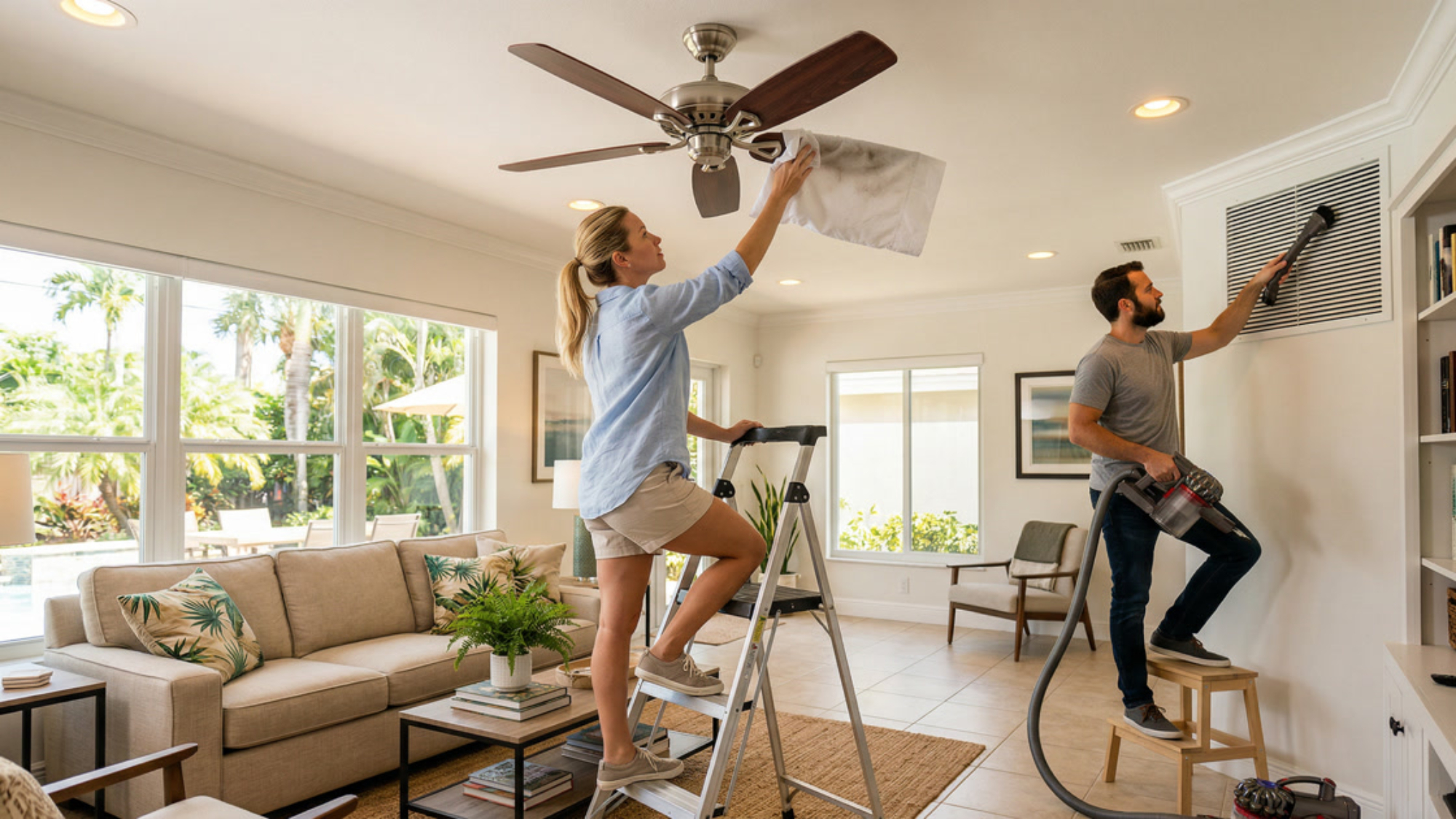
Ceiling fans and air vents are the two most overlooked surfaces in most homes. They’re up high, out of immediate sight, and easy to ignore — until you turn the fan on and a cloud of dust falls on your couch.
In Orlando, where AC runs 10 months a year, this problem is worse than almost anywhere else.
Key Takeaways
- The pillowcase method contains dust instead of scattering it — a must-have technique.
- Air vents should be cleaned every one to two months in Orlando’s high-use AC environment.
- Compressed air is the fastest way to blast debris from vent grilles and fan motors.
- HVAC filter checks should go hand-in-hand with vent cleaning — a clogged filter forces more dust through vents.
- Safety first — always shut off the fan at the wall switch or breaker before cleaning.
Why This Matters More in Orlando
Most U.S. homes run their AC four to five months a year. Orlando homeowners run it ten to eleven.
That means air is circulating through your ducts and vents constantly, carrying dust, pollen, pet dander, and mold spores with it. Ceiling fans run year-round too — and in a state with this much pollen and construction activity, blade buildup happens fast.
Dirty vents restrict airflow, reduce AC efficiency, and recirculate allergens throughout the home. Cleaning them isn’t just a cosmetic task.
How to Clean a Ceiling Fan: The Pillowcase Method
Why Use a Pillowcase?
The standard approach — wiping fan blades with a damp cloth — scatters dust directly below the fan onto furniture, floors, and people. The pillowcase method eliminates that.
What You Need
- An old pillowcase
- Step stool or ladder (safe working height)
- Damp microfiber cloth
- All-purpose spray cleaner
Step-by-Step
Step 1: Turn the fan off. Use the wall switch, not just the remote. Wait 30 seconds for the blades to fully stop.
Step 2: Slide the pillowcase over each blade. Push it all the way to the base, then pull back toward you while pressing the fabric against both the top and bottom of the blade. The dust collects inside the pillowcase instead of falling.
Step 3: Wipe down each blade. Use a lightly dampened microfiber cloth to remove remaining residue. Dry immediately — don’t leave moisture on wood blades.
Step 4: Clean the motor housing and light fixture. Spray all-purpose cleaner onto your cloth (not directly onto the fan) and wipe the housing, pull chains, and light globe. Dust collects heavily around the motor base and chain fixtures.
Step 5: Shake the pillowcase outside or straight into a trash bag. Wash it before reuse.
How to Clean Air Vents
Supply Vents vs. Return Vents
Supply vents push conditioned air into the room. Return vents pull air back to the HVAC system. Both collect dust, but return vents tend to accumulate more because they’re actively drawing air in.
Clean both types on the same schedule.
🧹 Tired of doing this yourself? CleanCorps handles deep cleans, recurring services, and move-in/move-out cleaning across Orlando. **
Option 1: Vacuum and Brush
Use the brush attachment on your vacuum and run it over the vent grille. This handles surface dust quickly without removing the cover.
For a deeper clean, use a soft-bristle brush (an old toothbrush works) to get between the slats.
Option 2: Compressed Air
For vents with visible buildup between the slats, a can of compressed air blasts it loose quickly. Hold the can upright, aim between the slats, and work in short bursts.
Do this before vacuuming — compressed air kicks debris up, and you want to vacuum it down afterward.
Option 3: Remove and Soak
For seriously dirty vents, remove the grille entirely. Most pop off with a screwdriver or by hand.
Soak removable covers in warm, soapy water for 15 minutes. Scrub with a stiff brush, rinse, dry completely, and reinstall.
Critical: The vent must be fully dry before reinstalling. A damp vent cover inside a duct is a mold risk — especially in Orlando’s climate.
Check Your HVAC Filter While You’re At It
If your vents are heavily coated in dust, your HVAC filter may be past its replacement date. A clogged filter pushes more debris through the system and out through the vents.
Standard 1-inch filters should be replaced every 30–60 days in Orlando homes with constant AC use. Thicker 4-inch filters can last three to six months.
Hold your current filter up to a light source. If you can’t see through it, it’s time for a new one.
Ceiling Fan Safety Tips
- Always turn the fan off at the wall switch before touching the blades — not just with the remote.
- Use a stable step stool or ladder rated for your weight. Don’t stand on a chair.
- If the fan wobbles, check that all blade bracket screws are tight. A loose bracket causes vibration that worsens over time.
- Don’t spray cleaners directly onto the fan — moisture near the motor or light socket is a hazard.
🧹 🏠 Want your whole Orlando home cleaned from ceiling fixtures to baseboards? Our team handles every surface thoroughly, on your schedule. **
How Often Should You Clean Ceiling Fans and Vents in Orlando?
Given year-round AC use, Orlando homeowners need a more frequent schedule than national averages suggest:
- Ceiling fans: Every three to four weeks during active-use months (virtually year-round here)
- Vent grilles: Every four to six weeks for a vacuum pass; full removal and soak every three months
- HVAC filter: Every 30–60 days with standard filters
Set a calendar reminder. It takes less than an hour for a full house and makes a real difference in indoor air quality.
Frequently Asked Questions
How do I clean a ceiling fan without getting dust everywhere?
Use the pillowcase method. Slide an old pillowcase over each blade, press the fabric against the blade surface, and pull back. The dust stays inside the pillowcase instead of falling on your furniture and floor.
How often should I clean ceiling fans in Florida?
Every three to four weeks. Orlando’s constant AC use and high pollen counts mean ceiling fan blades accumulate dust faster than in most other parts of the country.
Can I use compressed air to clean air vents?
Yes, and it’s one of the fastest methods. Compressed air loosens buildup between vent slats in seconds. Follow it with a vacuum pass to collect the loosened debris before it settles back.
Does cleaning air vents improve AC efficiency?
Yes. Restricted vents reduce airflow throughout the system. Clean vents — combined with a fresh HVAC filter — allow the system to move air more efficiently, which reduces energy consumption and extends equipment life.
What’s the best cleaner for ceiling fan blades?
A lightly dampened microfiber cloth with water and a drop of dish soap works well for most blades. For wood blades, use a barely damp cloth and dry immediately. Avoid spraying cleaners directly on the fan.
Final Recommendation
The pillowcase method and a regular vent cleaning schedule will dramatically improve your home’s indoor air quality — and your AC’s performance. In Orlando, where the system never really gets a rest, staying on top of these two tasks is worth more than most people realize.
When you’re ready to hand off the whole house, we’re here.
