
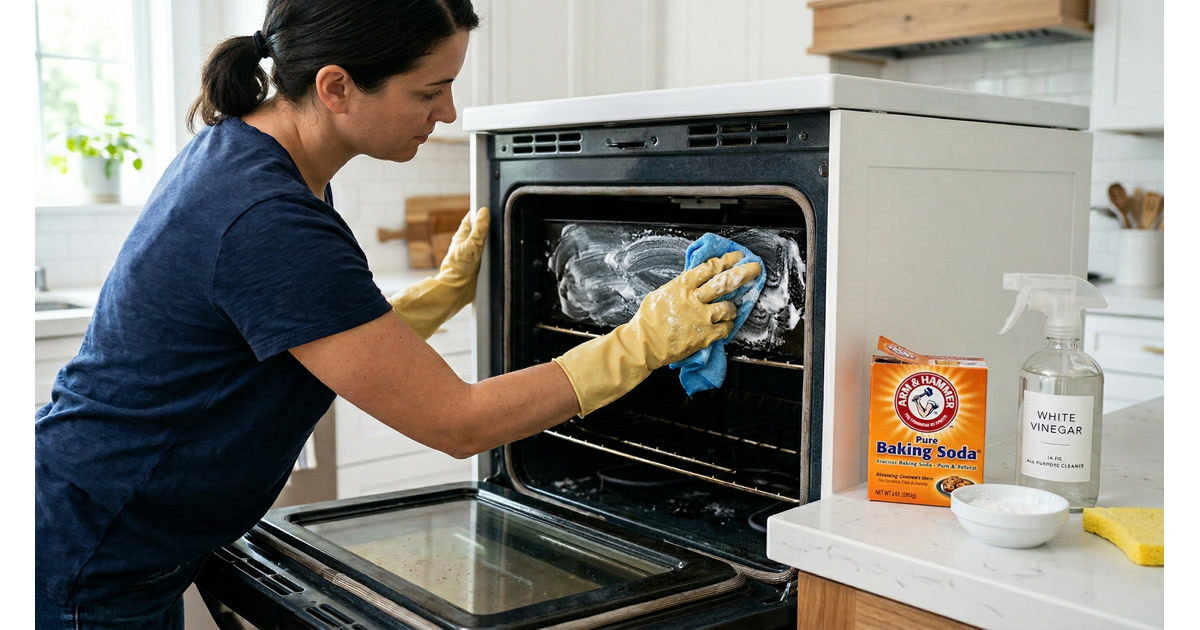
Commercial oven cleaners work — but they fill your kitchen with fumes, leave chemical residue, and should never be used if you have pets or kids nearby. In Orlando, where kitchens get hot and greasy year-round, there’s a better way. Baking soda and white vinegar do the job overnight, with zero toxins.
| Key Takeaways |
| Overnight baking soda paste: does the heavy lifting — no scrubbing required if you let it sit long enough. |
| Self-clean cycles carry real risks: They can trip thermal fuses, damage heating elements, and fill your home with smoke from burnt grease. |
| Oven racks soak overnight too: Hot water, dish soap, and a dryer sheet in the bathtub dissolves baked-on grease effortlessly. |
| The door glass has two layers: Grease often builds up between the glass panels, not just on the surface. |
| Orlando heat accelerates grease buildup: High ambient temperatures mean spatter bakes on faster — clean more often than you think you need to. |
What You’ll Need
- Baking soda
- White vinegar (in a spray bottle)
- Dish soap
- Warm water
- Rubber gloves
- A plastic or silicone spatula
- Microfiber cloths
- A dryer sheet (for racks)
Why Skip Harsh Chemicals?
Store-bought oven cleaners typically contain sodium hydroxide (lye) — a highly caustic substance.
It works fast, but it also releases fumes that irritate the lungs, can burn skin, and leave residue in your oven that heats up the next time you cook. If you have asthma, kids, or pets, that’s not a trade-off worth making. The baking soda method is slower but just as effective — and it costs almost nothing.
Step 1: Make the Baking Soda Paste
Mix ½ cup of baking soda with 2–3 tablespoons of water.
Stir until you get a thick, spreadable paste — about the consistency of toothpaste. You can add a few drops of dish soap for extra grease-cutting power. This is your cleaner. It’s non-toxic, food-safe, and surprisingly powerful.
Step 2: Apply the Paste and Let It Sit
Remove the oven racks first (more on those below). Then spread the paste across every interior surface of the oven — walls, floor, ceiling, and door interior.
Avoid the heating elements. Use your fingers or a silicone spatula to work the paste into every corner and crack. The paste will turn brown as it contacts grease — that’s it doing its job. Close the oven door and let it sit for at least 8 hours, or overnight. This is the most important step. Don’t rush it.
Step 3: Soak the Oven Racks
While the paste works overnight, soak the racks.
Fill your bathtub with hot water and add a generous squeeze of dish soap plus one or two dryer sheets. Lay the racks flat in the tub and let them soak overnight. The dryer sheet’s antistatic compounds help release baked-on grease from the metal. In the morning, a light scrub is all it takes. Rinse thoroughly and dry before putting them back.
Step 4: Wipe Out the Paste
After the overnight soak, use a damp microfiber cloth to wipe out the paste.
It should come out in chunks — baked grease trapped in the baking soda matrix. For stubborn spots, use a plastic spatula to scrape gently. Then fill your spray bottle with white vinegar and spritz all the surfaces. It will fizz where baking soda residue remains — that’s the reaction neutralizing any leftover alkaline residue. Wipe clean with a fresh damp cloth.
🧹 Tired of doing this yourself? CleanCorps handles deep cleans, recurring services, and move-in/move-out cleaning across Orlando.
This shortcode renders your Jobber booking widget on your website.
Step 5: Clean the Oven Door Glass
The door glass is usually the worst-looking part of the oven — and the most visible.
Apply the baking soda paste directly to the inside of the door glass. Let it sit 30–60 minutes if you’re doing this step separately. Scrub with a non-scratch sponge, then wipe clean with a vinegar-dampened cloth.
The Hidden Layer Problem
Many oven doors have two or three layers of glass. If your door glass looks dirty even after cleaning the surface, grease has gotten between the panels. Most oven doors can be disassembled with a screwdriver — check your oven’s manual for instructions. This is more common on older models and is worth doing at least once a year.
Why You Should Think Twice About the Self-Clean Cycle
The self-clean cycle sounds convenient — but it’s one of the most common causes of oven failure.
Self-clean cycles run your oven at 900°F+ for 2–5 hours. That extreme heat burns off food residue, but it also:
- Can trip the thermal fuse, leaving you with a dead oven
- Damages rubber gaskets and seals over time
- Generates thick smoke from burning grease — a serious problem in a sealed Florida home in summer
- Can be dangerous if your kitchen isn’t well-ventilated
If you keep up with regular cleaning, you’ll never need the self-clean cycle.
Orlando-Specific Tip: Grease Builds Up Faster Here
Orlando’s heat affects your kitchen too. Cooking on a hot day in a home that’s already 78°F inside means spatter bakes onto oven walls faster than it would in a cooler climate.
If you’re running your AC hard to keep the house cool, you’re also creating condensation cycles that can bake grease residue into a tougher crust. Clean your oven every 1–2 months if you cook regularly — not once or twice a year.
Step 6: Final Polish
Once the interior is clean and dry, wipe down the exterior with a damp cloth and dish soap.
For stainless steel oven fronts, use the same technique as the fridge: wipe with the grain using a microfiber cloth. Dry immediately. Polish with a small amount of rubbing alcohol for a streak-free finish.
🧹 Let the pros handle it. CleanCorps includes deep appliance cleaning with our kitchen deep clean service — no fumes, no hassle, no weekend lost to it. **
This shortcode renders your Jobber booking widget on your website.
Frequently Asked Questions
Is baking soda safe to use inside an oven?
Yes. Baking soda is food-safe and non-toxic. It leaves no harmful residue, and any that remains is neutralized by the vinegar rinse. It’s one of the safest ways to clean any surface that contacts food.
How long should I leave baking soda paste in the oven?
At minimum 4 hours, but overnight (8–12 hours) gives you the best results. The longer it sits, the more it breaks down baked-on grease and carbonized food particles.
Is it safe to use the self-clean cycle on my oven?
It’s not recommended if you have significant grease buildup. The high heat can ignite grease, produce heavy smoke, and damage oven components including the thermal fuse. Manual cleaning is safer and gentler on your appliance.
How do I clean between oven door glass panels?
Most oven doors can be removed and disassembled to access the inner glass panels. Check your oven’s manual for the specific procedure — it usually involves removing two to four screws. Once apart, clean each panel with the baking soda paste method and reassemble.
How often should I clean my oven in Orlando?
Every 4–6 weeks if you cook regularly. Orlando’s heat means spatter and grease bake on faster than in cooler climates. Light wipe-downs after each use (once the oven cools) can stretch your deep clean intervals significantly.
Final Recommendation
The overnight baking soda method is the only oven cleaning approach you need. It’s safer than commercial cleaners, gentler on your oven than the self-clean cycle, and cheap. The key is patience — let the paste work while you sleep.
If oven deep cleaning is on a long list of kitchen tasks you keep putting off,

